Login

Skyview  >  Login

How to Choose the Best Wooden Windows for Your Home?

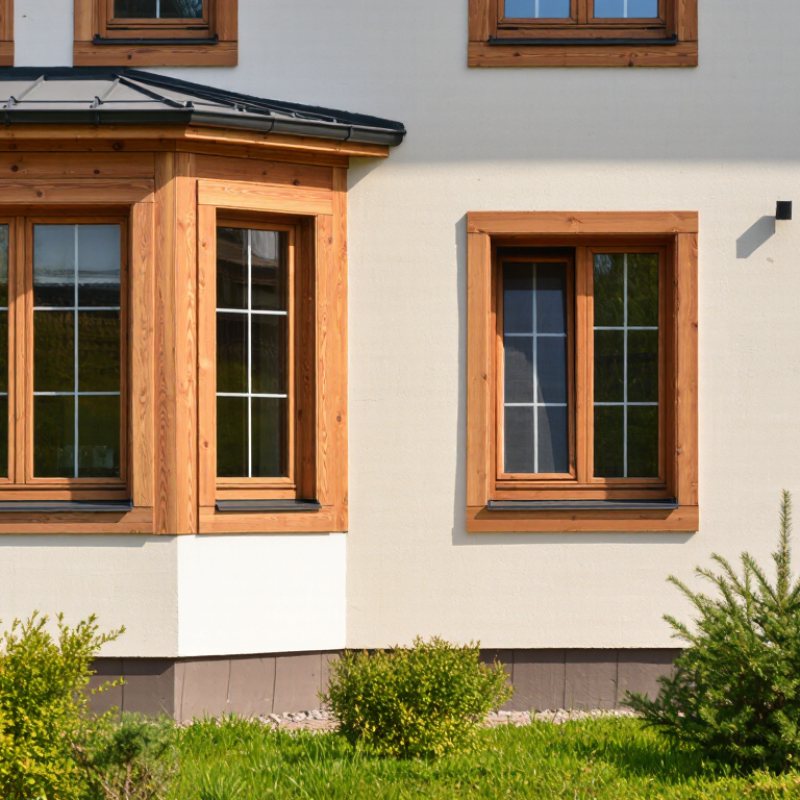
Choosing the best wooden windows for your home involves more than appearance. Timber frames can bring warmth, repairability, and strong architectural character. However, performance depends on design, installation, glazing, and maintenance.

The U.S. Department of Energy reports that windows can account for 25–30% of residential heating and cooling energy use. Its guidance recommends considering U-factor, solar heat gain coefficient, air leakage, and climate suitability before selecting replacement windows. ENERGY STAR also reports that certified windows can reduce household energy bills, although savings vary by region, building age, and existing window condition. These figures matter. A beautiful frame cannot compensate for poor sealing.

Peter Trott, a former chairman of the Wood Window Alliance, describes timber as “a natural, renewable and sustainable material.” That statement is useful, but incomplete. Responsible sourcing, factory coatings, drainage details, and regular inspection also influence environmental performance. The Forest Stewardship Council’s reports emphasize traceable wood supply, while the Wood Window Alliance highlights factory finishing and repairability as important quality factors.

Look closely.

This guide will compare timber species, glazing options, frame profiles, energy ratings, and installation standards. It will also examine practical details, such as condensation near the lower sash, peeling paint at exposed joints, and the sound of traffic through thin glass. The “best” wooden windows are not always the most expensive. Sometimes, a carefully restored existing frame performs better than an unnecessary replacement. That possibility deserves honest consideration.
How to Choose the Best Wooden Windows for Your Home?

Define Window Performance Targets: U-Factor ≤0.30 and SHGC by Climate Zone

When comparing wooden windows, set a clear U-factor target before choosing frame styles or finishes. U-factor measures heat transfer; lower numbers generally mean better insulation. A target of 0.30 or less is a useful starting point, not a magic line for every home. Check the NFRC label for the complete window’s rating, rather than relying on claims about wood frames alone.

Choose SHGC according to climate and window direction. In colder regions, a higher SHGC can admit helpful winter sunlight, especially through south-facing windows. In hot climates, a lower SHGC can limit solar heat and reduce cooling demand. Local shade, roof overhangs, and nearby buildings matter too. A sunny room under a deep porch may need different glazing from an exposed one. Small details matter.

Compare ratings for the climate zone where the home is located, and consider seasonal comfort alongside energy use. A very low SHGC may reduce summer overheating but also block useful winter warmth. Ask a qualified installer how the selected glazing performs with your home’s orientation and shading. Even strong ratings can disappoint if gaps around the frame allow drafts or moisture. That part is easy to overlook.

Compare Wood Species, Moisture Content, and 20–25-Year Maintenance Cycles

Choosing wooden windows starts with matching the species to your climate and exposure. Oak and other dense hardwoods can offer durable frames, while lighter softwoods are easier to machine and may need more protective detailing outdoors. Species alone is not a guarantee. USDA Forest Products Laboratory’s Wood Handbook explains that wood’s movement depends on species and moisture conditions. It places the average fiber-saturation point near 30% moisture content; below that level, drying can cause shrinkage. Small gaps matter. Ask for documented moisture readings and well-sealed end grain, especially around joints and glazing rebates.

Plan maintenance across the window’s full life, not just the first few seasons. A 20–25-year horizon is useful for budgeting and inspection, but it is not a universal repainting interval. Sun, rain, orientation, and coating quality change the schedule. Check lower rails and exposed sills each year for cracked paint, soft spots, or water trapped in joints. Repairing a small finish failure early is usually simpler than replacing damaged timber. USDA’s Wood Handbook also describes moisture movement as a key cause of dimensional change, so installation details matter: drainage paths should remain open, and frames should not be sealed in ways that trap water. This is easy to overlook. Reassess the finish more often on south- or west-facing elevations; even careful owners may find their local exposure behaves differently.

How to Choose the Best Wooden Windows for Your Home?

Compare typical wood density, moisture content, and maintenance needs over a 20–25-year planning horizon.

The bars show approximate density at 12% moisture content; actual values vary by species, grade, and source. Density alone does not determine durability or window performance. For many exterior joinery applications, timber is commonly specified around 12–16% moisture content at installation, subject to local conditions and project specifications. Inspect coatings regularly—at least annually—and renew them when needed; exposed finishes may need attention every few years, while sheltered windows can go longer. A 20–25-year horizon is a planning period, not a maintenance-free interval.

Evaluate Glazing Options: Double vs. Triple Pane and Low-E Coatings

Choosing wooden windows starts with the glass, not the frame alone. Double-pane units use two glass layers and insulating gas. Triple-pane designs add a third layer, reducing heat transfer but increasing weight and cost. The U.S. Department of Energy reports that Low-E coatings can reduce window energy loss by about 30% to 50%. Results depend on climate, orientation, and installation quality. A sunny south-facing window may need different solar control than a shaded north-facing one.

NFRC ratings provide a practical comparison. U-factor measures heat flow; lower values indicate better insulation. Solar Heat Gain Coefficient, or SHGC, shows how much solar heat enters. ENERGY STAR criteria vary by climate zone, so one specification cannot suit every home. In cold regions, triple glazing may improve comfort near the glass. In mild, sunny regions, double glazing with Low-E may offer better value. More glass is not automatically better.

Tips: Request the complete NFRC label, not only a center-glass claim. Compare whole-window U-factor and SHGC. Check whether the spacer and gas fill are included. Touch the interior edge on a cold morning. Persistent chill may reveal a weak frame or installation gap. I have seen beautiful timber windows perform poorly when sealing was overlooked. That is the uncomfortable lesson: advanced glazing cannot fix poor fitting. Review condensation risks before choosing.

How to Choose the Best Wooden Windows for Your Home? — Evaluate Glazing Options: Double vs. Triple Pane and Low-E Coatings

Evaluation Dimension Double-Pane, Clear Glass Double-Pane, Low-E Glass Triple-Pane, Low-E Glass What to Consider for a Wooden Window
Glazing construction Two glass panes separated by one sealed insulating air or gas-filled space. Two glass panes with a microscopically thin Low-E coating on one surface; commonly paired with argon gas. Three glass panes with two sealed insulating spaces; commonly paired with Low-E coatings and argon gas. Triple glazing provides more insulation, but the thicker and heavier unit requires a strong sash, frame, hinges, and hardware.
Typical whole-window U-factor About 0.30–0.48 Btu/h·ft²·°F About 0.20–0.32 Btu/h·ft²·°F About 0.15–0.24 Btu/h·ft²·°F Lower U-factor means less heat transfer. The exact result depends on the frame, spacer, sash design, installation, and glass specification.
Interior surface temperature in cold weather Warm compared with single glazing, but more likely to feel cool near the glass. Warmer than clear double glazing because the coating reduces radiant heat loss. Generally the warmest interior glass surface, reducing cold downdrafts and perimeter discomfort. Useful for bedrooms, living areas, and large windows where occupants sit close to the glass.
Solar heat gain control Higher solar gain, which can help passive heating but may increase summer overheating. Available with different solar-control levels; selective Low-E glass can reduce unwanted solar heat while preserving daylight. Usually offers very good insulation; solar gain depends strongly on the selected Low-E coating and glass orientation. For south- or west-facing windows, compare the SHGC value rather than choosing glazing by pane count alone.
Typical visible light transmission Approximately 70–82% with clear glass. Approximately 55–75%, depending on the Low-E coating and glass thickness. Approximately 45–70%, depending on the number of coatings, pane thickness, and glass type. Lower visible transmittance can slightly reduce daylight. Ask for the VT value when natural light is a priority.
Condensation resistance Better than single glazing, but more vulnerable at cold edges and in humid rooms. Good, because the inner pane remains warmer; edge performance still depends on the spacer and frame. Typically the best resistance to interior condensation in cold climates. Ventilation and indoor humidity control remain important. No glazing guarantees condensation-free performance in every condition.
Sound reduction Moderate improvement over single glazing. Moderate improvement; Low-E primarily improves thermal performance rather than sound insulation. Often somewhat better, but pane thickness, laminated glass, air-space width, and airtight installation matter more than pane count alone. For traffic noise, consider laminated or asymmetric glass and a tested acoustic rating such as OITC or STC.
Approximate glazing weight About 20 kg/m² for two 4 mm glass panes, excluding the frame. About 20–25 kg/m², depending on pane thickness and gas-filled unit construction. About 30 kg/m² or more for three 4 mm glass panes, excluding the frame. Verify sash load limits and hardware capacity before specifying large triple-glazed wooden casements or tilt-and-turn windows.
Typical cost compared with clear double glazing Baseline Approximately 5–20% higher Approximately 20–50% higher Actual pricing varies with window size, wood species, joinery, glass thickness, hardware, installation, and local labor costs.
Best climate or application Mild climates, secondary rooms, budget-focused replacements, or locations with limited heating and cooling demand. Most homes seeking a practical balance of insulation, daylight, comfort, and cost. Cold climates, highly insulated homes, passive-solar designs, and rooms where maximum winter comfort is important. Climate zone, orientation, window size, heating system, and energy targets should guide the final selection.
Low-E coating choice Not included. Choose a coating based on climate and orientation: higher solar gain may benefit cold, sunny elevations, while lower solar gain can help limit summer heat. Often uses one or more Low-E coatings to balance insulation, solar control, and daylight. Confirm the coating position, U-factor, SHGC, VT, and warranty in the product specification rather than relying only on the term “Low-E.”
Primary advantages Lower initial cost, lighter sash, good daylight, and simpler design. Strong all-around performance, improved comfort, reduced heat loss, and usually a favorable value-to-performance ratio. Excellent thermal insulation, warmer glass, lower heat loss, and strong condensation resistance. For many wooden windows, double-pane Low-E glazing is the balanced choice; triple-pane Low-E is preferable when energy performance justifies the added weight and cost.
Potential limitations Higher heat loss and cooler interior glass than Low-E alternatives. Higher cost than clear double glazing; some coatings can reduce visible light or solar warmth. Highest cost and weight; may require deeper frames, stronger hardware, and careful installation. Always evaluate the complete window, including the wood frame, edge spacer, air leakage, installation quality, and drainage details.
Practical recommendation Choose when initial budget and low weight are the main priorities in a mild climate. Best general-purpose option
Suitable for many renovations and new homes.
Best high-performance option
Most suitable when winter energy efficiency and interior comfort are top priorities.
Request independently tested whole-window performance values and compare U-factor, SHGC, VT, air leakage, and installation details together.

Note: Performance ranges are representative estimates for complete residential windows and can vary substantially by size, frame design, glass thickness, gas fill, spacer, coating, climate, and test standard. Lower U-factor indicates better insulation. SHGC describes the fraction of solar heat admitted, while VT describes the fraction of visible light transmitted.

Verify Air Leakage, Water Resistance, and NFRC-Certified Test Ratings

When comparing wooden windows, look beyond the frame’s appearance. Ask for documented air-leakage and water-resistance test results for the specific window configuration. A tight sash should limit drafts around its edges, while sound weather seals help keep wind-driven rain outside. Check that tests reflect the size, glazing, and opening style you plan to buy; results can vary between models. Small details matter. Look closely at corner joints, gaskets, and drainage paths, where poor fit or installation can undermine performance.

Read the NFRC label for energy ratings such as U-factor and Solar Heat Gain Coefficient. These figures help compare heat loss and solar heat entering a home under standardized conditions. NFRC ratings are not a substitute for separate air-leakage or water-penetration test reports. Ask the supplier which independent standards were used, and request the full report rather than relying on a broad performance claim. Also confirm that the tested product matches the quoted unit. That step is easy to skip. A well-rated window can still perform poorly if it is installed out of square or left without proper flashing, so discuss installation details before making your choice.

Calculate Total Cost Using 20–30-Year Service Life and Annual Energy Savings

How to Choose the Best Wooden Windows for Your Home?

Calculate the full cost, not just the quote. Include purchase, installation, repainting, repairs, and expected energy savings over 20–30 years. The U.S. Department of Energy notes that windows account for about 25–30% of home heating and cooling energy use. That is a share of energy use, not a guaranteed saving from replacement. Small distinction. It matters.

Estimate annual savings using your recent utility bills and a contractor’s energy assessment, then multiply by your chosen service life. ENERGY STAR reports that replacing single-pane windows with certified models can save an average of 13% on energy bills in the United States; actual results vary by climate, home, and existing windows. For wooden units, include periodic finish maintenance in the calculation. A south-facing frame exposed to rain and strong sun may need attention sooner than a sheltered one. Ask for the window’s NFRC-rated U-factor and solar heat gain coefficient, and compare like-for-like products.

For example, if a project costs $18,000 and saves $450 each year, simple payback is 40 years, before maintenance or energy-price changes. That may exceed a 20–30-year service-life estimate. Use a range of savings, not one optimistic figure, and subtract maintenance costs from annual benefits. Estimates can be messy. Still, a transparent worksheet helps reveal whether comfort, appearance, and lower drafts justify costs that energy savings alone may not recover.