
Top 10 Aluminum Composite Panel Manufacturers Worldwide
Choosing the right supplier requires more than comparing glossy brochures or production numbers. This guide introduces the Top 10 Aluminum Composite Panel Manufacturers Worldwide, focusing on practical factors that influence real building projects. A reliable Aluminum Composite Panel Manufacturer should demonstrate consistent panel quality, clear technical documentation, and dependable production control.
We compare manufacturers through product range, core materials, surface finishes, coating performance, and available panel thicknesses. Fire classification, weather resistance, flatness, and color stability receive particular attention. These details affect façades, signage, interiors, and transportation applications. They also influence installation speed and long-term maintenance costs. Small details matter.
The assessment considers manufacturing experience, laboratory testing, quality certifications, project references, and customer support. We also examine whether each company explains its specifications clearly. Transparent data often indicates stronger professional responsibility. However, published information can vary between regions and product lines. No ranking can represent every local strength perfectly.
That limitation matters. Market leadership is not defined by size alone. A large factory may not suit a project requiring custom colors or short delivery times. Conversely, a smaller producer may offer careful service but limited international capacity. Readers should verify current certifications, technical datasheets, warranty terms, and compliance requirements before making a decision. This introduction provides a practical starting point, not a substitute for engineering review. It aims to connect manufacturers with informed buyers seeking safe, durable, and visually consistent aluminum composite panel solutions.
Aluminum Composite Panels: Structure, Uses, and Industry Importance
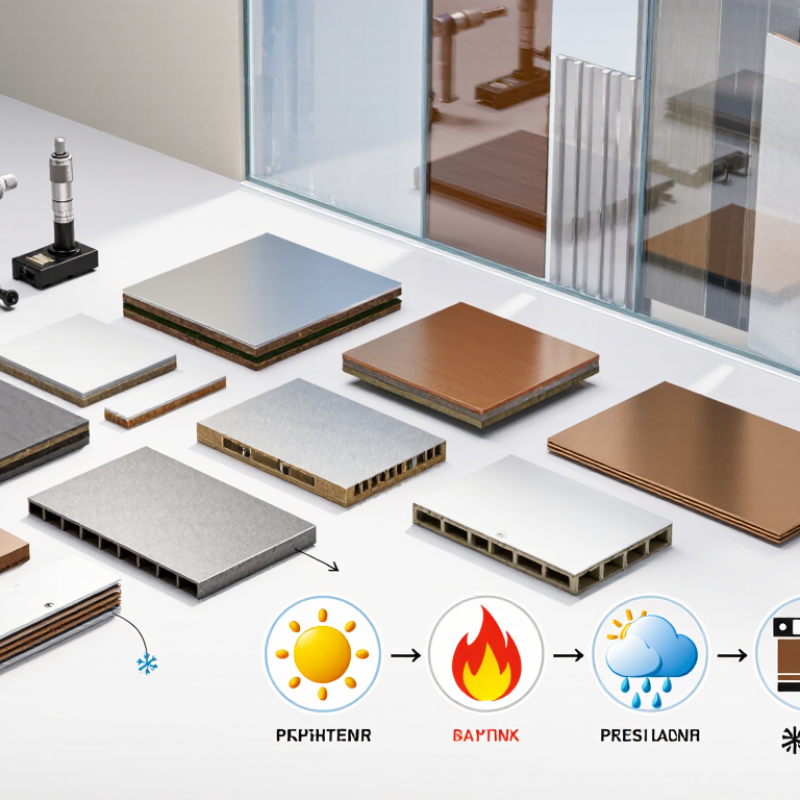
Aluminum composite panels combine two thin aluminum skins with a mineral or polymer core. This layered structure creates a light, rigid sheet for demanding building projects. The panels resist bending better than many single metal sheets. Their smooth surfaces also support durable coatings and precise color control. In practice, installers value panels that cut cleanly and align without visible gaps. A poorly designed joint can still allow moisture behind the facade. That detail is often underestimated.
These panels appear on exterior walls, balconies, canopies, signs, interior partitions, and transport facilities. Their low weight can reduce handling effort and structural loads. Their flat appearance helps architects create sharp lines across large surfaces. Fire performance varies by core type, so technical documentation matters. Weather exposure also changes maintenance needs. Some finishes show scratches quickly. That is an honest limitation.
Tips: Check the core classification, coating quality, panel thickness, and installation guidance. Request tested data for fire, wind, impact, and weather resistance. Compare warranty language with local climate conditions. Experienced contractors should inspect joints, fasteners, and drainage paths before closing the facade.
For the top 10 manufacturers worldwide, evaluation should go beyond production volume. Reliable suppliers demonstrate consistent thickness, traceable materials, and documented quality controls. Certifications can support confidence, but they cannot replace site experience. I would also examine technical support and replacement-panel availability. A strong factory may still perform poorly with weak installation guidance. That tension deserves more attention.
Criteria for Evaluating Global Aluminum Composite Panel Manufacturers
Evaluating the top 10 aluminum composite panel manufacturers requires more than comparing prices or factory size. Real manufacturing experience matters. Review production history, project references, and the company’s ability to maintain stable quality across large orders. Ask for technical data, not attractive brochures. A reliable manufacturer should explain panel composition, aluminum thickness, core type, coating system, and dimensional tolerances in clear language.
Independent testing is essential. Check reports for fire performance, bond strength, coating adhesion, weather resistance, and color stability. Testing should match the intended climate and building application. Quality control must cover incoming materials, lamination temperature, flatness, and final inspection. During practical evaluations, I look for traceable batch records and sample panels cut from normal production. Perfect samples may be prepared only for display. That deserves caution.
Supply capability also affects the ranking. Examine production capacity, lead times, packaging methods, and export documentation. Strong manufacturers provide installation guidance and respond accurately to technical questions. Sustainability deserves careful review, including recycled aluminum content, coating emissions, waste handling, and material declarations. Claims should be supported by verifiable certificates. Custom colors and sizes are useful, but consistency matters more than variety. A small mismatch can become obvious across a building facade. No ranking is flawless. Site conditions, local standards, and project budgets can change the best choice. Manufacturers should acknowledge these limitations instead of promising universal performance.
Profiles of the Top 10 Aluminum Composite Panel Manufacturers
The top ten aluminum composite panel manufacturers stand out through different strengths, not identical production models. One specializes in fire-resistant cores for transport buildings and hospitals. Another focuses on thin, lightweight panels for retail façades. A European producer is known for tight color matching and controlled surface gloss. Its testing records matter more than polished brochures.
Several Asian manufacturers combine large extrusion capacity with automated lamination lines. Their panels often serve high-rise projects, where flatness and consistent thickness are essential. One profile centers on recycled aluminum content and documented material traceability. Another supports custom perforation, bending, and digitally printed finishes. These options help architects solve detailed façade problems. They also increase inspection requirements.
Two North American manufacturers emphasize regional supply and responsive technical service. Their teams commonly review wind loads, joint spacing, and installation drawings before production. A Middle Eastern supplier focuses on heat-resistant coatings for intense sunlight and dusty environments. The final profile represents a smaller specialist with flexible minimum orders and short sampling cycles. Useful, but not always scalable.
A reliable comparison should examine core composition, coating warranty terms, fire-test evidence, and factory quality controls. Site experience has taught installers that a visually perfect panel can still fail through poor routing or weak joints. Manufacturing reputation is valuable. It is not enough alone. Independent test reports, batch records, and clear technical support deserve equal attention. Ranking these ten remains imperfect because project conditions change by climate, code, and installer skill.
Top 10 Aluminum Composite Panel Manufacturers Worldwide
Profile snapshot of the global aluminum composite panel industry based on commonly specified panel thicknesses across major architectural, commercial, and industrial applications.
The chart uses common nominal ACP thicknesses found in industry product specifications. Panels around 3 mm are frequently used for signage and interior applications, while 4–6 mm panels are widely specified for façades, rainscreens, canopies, and other exterior uses. The visualization describes market-standard product profiles and does not disclose company or brand-specific data.
Regional Markets and Production Strengths in the Global Industry
The global aluminum composite panel industry is shaped by uneven regional demand and production depth. Grand View Research estimates a global market growth rate of about 6.1% annually from 2024 to 2030. Asia-Pacific remains the largest manufacturing base, supported by dense coating capacity, aluminum supply, and large construction programs. China supplies substantial export volume, while South Korea, India, and Southeast Asia are expanding specialized production.
Europe competes through engineering control rather than sheer volume. Manufacturers there commonly emphasize fire-rated cores, low-emission coatings, and documented façade performance. The European market also reacts strongly to energy efficiency rules and renovation demand. MarketsandMarkets places the wider aluminum composite panels sector on a growth path near 6% to 7% annually, although estimates vary by product definition and regional coverage.
The Middle East benefits from high-value commercial construction, harsh sunlight, and demand for durable exterior finishes. North American producers focus on specification compliance, recycled content, and shorter delivery routes. These strengths affect any top-ten comparison: output alone is not enough. A supplier with slower production may offer stronger testing records or better color consistency. Small details matter. Panel flatness, coating thickness, core stability, and pallet protection can decide project costs. Market reports provide direction, not certainty. Their figures deserve careful review against customs data, plant capacity, and actual project deliveries.
Top 10 Aluminum Composite Panel Manufacturers Worldwide - Regional Markets and Production Strengths in the Global Industry
| Rank | Anonymized Manufacturer | Primary Production Region | Core Regional Markets | Main Panel Strength | Common Core Options | Typical Applications | Relevant Market Standards |
|---|---|---|---|---|---|---|---|
| 1 | Manufacturer 01 | East Asia | Asia-Pacific, Middle East, Africa, Latin America | High-volume architectural panels with broad color and finish selection | Polyethylene, mineral-filled fire-retardant, and non-combustible mineral cores | Building façades, signage, canopies, interior wall systems | ISO 9001-based quality systems; ASTM and EN fire-test routes |
| 2 | Manufacturer 02 | Western Europe | European Union, United Kingdom, North Africa | Premium façade systems focused on fire performance and weather durability | Mineral-filled and non-combustible cores | High-rise façades, rainscreen cladding, renovation projects | EN 13501-1, EN 1396, CE-related construction requirements |
| 3 | Manufacturer 03 | North America | United States, Canada, Mexico | Architectural cladding and fabrication-ready panels for commercial construction | Standard polyethylene and fire-retardant cores | Commercial buildings, retail façades, corporate interiors, signage | ASTM E84, ASTM E283, NFPA-related project specifications |
| 4 | Manufacturer 04 | South Asia | India, Southeast Asia, Gulf countries, East Africa | Cost-efficient large-volume production with custom sizes and finishes | Polyethylene, fire-retardant, and mineral-filled cores | Residential towers, commercial façades, advertising boards | ISO 9001 practices; ASTM, EN, and local building-code testing |
| 5 | Manufacturer 05 | East Asia | China, Japan, South Korea, Southeast Asia | High-precision coating, decorative finishes, and project customization | Polyethylene and fire-retardant cores | Interior partitions, shopfronts, façades, transportation interiors | ISO 9001 practices; regional fire, coating, and weathering tests |
| 6 | Manufacturer 06 | Middle East | Gulf Cooperation Council, North Africa, South Asia | Solar-reflective coatings and durability for hot, high-UV climates | Fire-retardant and mineral-filled cores | Hotels, airports, office towers, curtain-wall accents | ASTM and EN fire testing; accelerated weathering and coating tests |
| 7 | Manufacturer 07 | Central and Eastern Europe | European Union, Balkans, Central Asia | Insulated façade assemblies and retrofit-oriented products | Mineral-filled and non-combustible cores | Energy-efficiency renovations, industrial buildings, public facilities | EN 13501-1, EN 1396, CE-related performance documentation |
| 8 | Manufacturer 08 | Latin America | Brazil, Mexico, Chile, Colombia, Central America | Regional supply, custom fabrication, and exterior signage production | Polyethylene and fire-retardant cores | Retail façades, storefronts, signage, low- and mid-rise buildings | ASTM-based testing and national construction-code requirements |
| 9 | Manufacturer 09 | Oceania | Australia, New Zealand, Pacific Islands | Compliance-focused façade supply for wind, weather, and bushfire-sensitive projects | Fire-retardant and non-combustible cores | Commercial façades, residential developments, transport facilities | AS 1530.1, AS 5113, and project-specific façade testing |
| 10 | Manufacturer 10 | Africa | Southern Africa, East Africa, North Africa | Flexible regional distribution and durable exterior panels for demanding climates | Polyethylene, fire-retardant, and mineral-filled cores | Shopping centers, offices, hotels, façades, and signage | ASTM and EN test methods; local fire and façade regulations |
Note: The manufacturer identifiers are intentionally anonymized. Regional positioning, core types, applications, and standards reflect established aluminum composite panel industry categories; actual product compliance should be verified through current technical documentation and project-specific certifications.
Product Quality, Sustainability, and Future Manufacturing Trends
The top 10 aluminum composite panel manufacturers worldwide are increasingly judged beyond surface appearance. Product quality begins with consistent core density, flatness, coating adhesion, and reliable fire performance. Independent laboratory testing matters more than impressive brochures. Factory audits can reveal whether production controls work during busy periods, not only during demonstrations. In practical projects, installers notice small defects first: uneven edges, color variation, or protective film that tears too easily. These details influence labor costs and long-term trust.
Sustainability is becoming a measurable manufacturing responsibility. Leading producers are increasing recycled aluminum content, reducing solvent use, and purchasing lower-carbon electricity. Environmental product declarations can help buyers compare impacts, although the data is not always presented consistently. Recycled materials may also create finish variations. That trade-off deserves honest discussion.
Some factories now use automated coating lines, machine-vision inspection, and digital production records to reduce waste. Future plants may connect these systems with predictive maintenance and material passports for easier panel recovery. Fire-resistant cores, improved recyclability, and lighter designs will remain important. Lighter is not always better. A thinner panel can save transport emissions, yet it may demand stricter installation control.
Manufacturers that publish test methods, disclose limitations, and respond clearly to failures appear more credible than those relying on polished claims. Human inspection still matters, especially when unusual weather, complex façades, or rushed schedules expose weaknesses that software may miss.
