How to Choose the Right Aluminum Composite Panel?
Choosing the right Aluminum Composite Panel begins with understanding the building, not the brochure. A panel that performs well on a sheltered shopfront may fail on a coastal façade. Wind exposure, sunlight, rain, temperature changes, and cleaning methods all influence the decision. These details are easy to overlook.
Start by checking the panel’s core, surface coating, thickness, and fire-performance documentation. The core affects weight, rigidity, and safety requirements. The coating affects color stability and resistance to scratches. A sample should be viewed outdoors, not only under showroom lights. Notice the surface texture. Check whether edges remain flat after cutting.
Real project experience also matters. Ask suppliers for technical datasheets, test reports, warranty terms, and completed installation references. Reliable documentation is more useful than confident sales language. Confirm whether the product suits your local climate and applicable building standards. Professional advice from a qualified architect, façade engineer, or installer can prevent expensive mistakes.
Do not choose by price alone.
A lower-cost Aluminum Composite Panel may reduce the initial budget, yet create higher maintenance costs later. However, premium pricing does not guarantee the best result. This is where judgment becomes necessary. I have seen attractive specifications fail when installers ignored joint movement or used unsuitable adhesives. The product was not always the problem. Installation decisions mattered too.
This guide examines the practical factors behind a dependable choice. It considers appearance, durability, fire performance, fabrication, maintenance, and supplier reliability. Some projects will still involve compromises. That is normal. The goal is not to find a perfect panel, but to select one that fits the building honestly and performs reliably over time.
Define ACP Construction: 3–6 mm Panels and 0.3–0.5 mm Aluminum Skins
How to Choose the Right Aluminum Composite Panel?
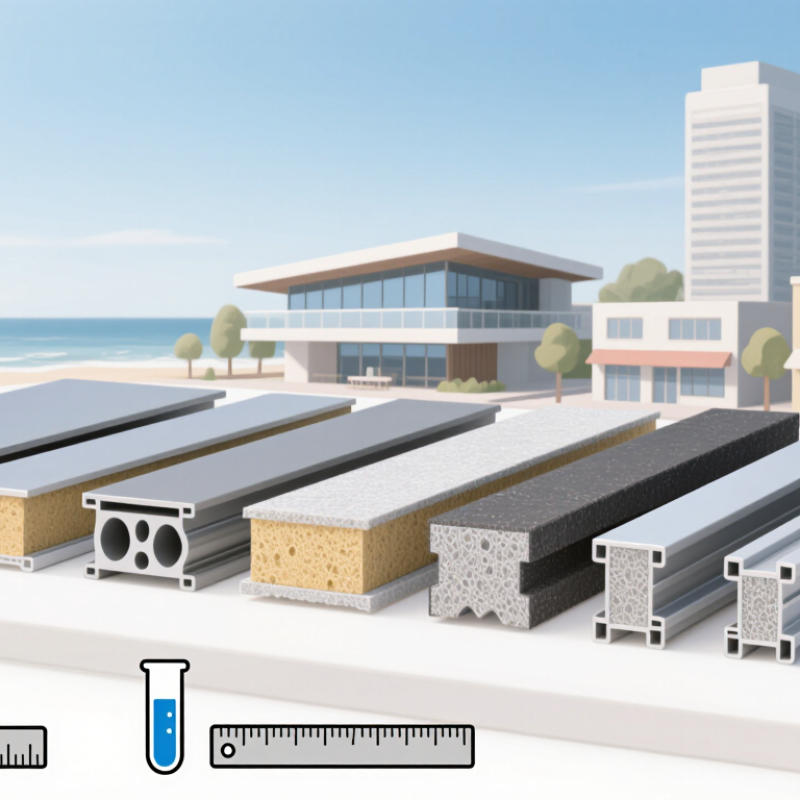
An aluminum composite panel is a factory-bonded sandwich structure. Overall thickness usually ranges from 3 to 6 mm. Each aluminum skin commonly measures 0.3 to 0.5 mm. The remaining space contains a mineral, polymer, or hybrid core. That core is not a minor detail. It influences stiffness, moisture response, acoustic behavior, and fire performance. A thicker panel does not automatically provide better protection.
The 2024 Global Status Report for Buildings and Construction states that buildings consume about 32% of global energy and create roughly 34% of global carbon emissions. Facade choices therefore deserve careful evaluation. The International Aluminium Institute reports that recycled aluminum can require about 5% of the energy used for primary aluminum production. However, recycled content alone cannot prove panel quality. Confirm alloy, coating thickness, core composition, bonding strength, and verified fire-test results.
On site, 0.3 mm skins may suit lighter interior or sheltered applications, while 0.5 mm skins generally offer better dent resistance and handling tolerance. This is a practical tendency, not a universal rule. I would still check wind loads, fixing spacing, panel span, and local weather exposure. A neat specification can fail when installers over-tighten fasteners or ignore edge sealing. Ask for independent test reports, not only a sales datasheet. Small details matter.
How to Choose the Right Aluminum Composite Panel?
Representative ACP construction: total panel thickness, aluminum skins, and calculated core thickness
Aluminum composite panels commonly use total thicknesses of 3–6 mm with aluminum skins of 0.3–0.5 mm per side. The core thickness shown here is calculated as: total panel thickness − two aluminum skin thicknesses. Actual specifications may vary by application and manufacturer.
Compare PE, PVDF, and FEVE Coatings by Resin Content and Durability
How to Choose the Right Aluminum Composite Panel?
Resin content strongly affects an aluminum composite panel’s durability. PE coatings usually contain polyester resin and suit indoor walls, shop signs, and sheltered areas. They offer color and cost advantages. However, prolonged sunlight can cause fading, chalking, or surface aging. I would not select PE for a coastal façade without careful testing.
PVDF coatings commonly specify a high fluoropolymer resin percentage, often around 70 percent. This structure improves resistance to ultraviolet light, moisture, and industrial pollution. It performs well on exterior façades exposed to strong sun and seasonal rain. FEVE coatings also use fluoropolymer resin, but their formulation can provide richer gloss and stronger color depth. They are useful when appearance matters as much as weather resistance.
Resin percentage is only one clue. Coating thickness, aluminum preparation, curing, panel edges, and installation quality also influence service life. Request the exact resin content, dry-film thickness, color-retention data, and corrosion test results. Check the project’s climate, too. Salt air is unforgiving. A high-resin coating can still fail when cut edges remain unsealed or water stays trapped behind panels. This is where many specifications look convincing but feel incomplete. In practice, I compare test evidence with the building’s exposure, rather than choosing by coating name alone. The cheapest option may become expensive after repeated repainting or replacement.
How to Choose the Right Aluminum Composite Panel? - Compare PE, PVDF, and FEVE Coatings by Resin Content and Durability | Comparison Dimension | PE Coating | PVDF Coating | FEVE Coating |
| Primary binder | Polyester resin | Fluoropolymer resin based on polyvinylidene fluoride | Fluoroethylene vinyl ether fluoropolymer resin |
| Typical resin share of cured topcoat solids | Approximately 20–30% | Approximately 65–70% | Approximately 50–60% |
| Typical dry-film thickness | About 15–20 μm | About 25–30 μm | About 25–30 μm |
| Expected exterior service life* | Typically 5–10 years, depending on climate and exposure | Typically 15–20+ years when properly specified and maintained | Typically 15–20+ years when properly specified and maintained |
| Resistance to UV radiation | Moderate; more susceptible to fading and chalking during prolonged exposure | High; strong resistance to UV-related color change and chalking | High; strong resistance to UV-related color change and chalking |
| Color and gloss retention | Good for short- to medium-term applications; retention varies by formulation and color | Very good; suitable for demanding architectural exteriors | Very good to excellent; available in a broad range of gloss levels and colors |
| Resistance to chemicals and pollutants | Moderate | High | High |
| Surface hardness and scratch resistance | Generally good, but performance depends strongly on the resin and curing system | Good; protective clear coats may further improve surface performance | Good; formulation-specific hardness can support enhanced finish durability |
| Recommended applications | Interior panels, signage, shopfronts, canopies, and cost-sensitive low-rise projects | High-rise façades, curtain walls, coastal areas, and projects requiring long-term weatherability | Architectural façades, premium color designs, complex profiles, and high-gloss finishes |
| Relative cost | Low | High | Medium to high |
| Best selection guideline | Choose when initial cost and moderate exposure resistance are the main priorities | Choose when long-term UV, color, and weather resistance are critical | Choose when high weatherability, color flexibility, and finish options are required |
| *Note: Values are typical industry ranges for architectural aluminum composite panel coatings. Actual performance depends on resin formulation, pigment quality, coating thickness, pretreatment, curing, panel fabrication, installation, UV exposure, pollution, cleaning, and maintenance. Always verify the supplier's technical data sheet and applicable coating-performance standards. |
Match Panel Weight, Stiffness, and Wind Loads to Building Requirements
How to Choose the Right Aluminum Composite Panel?
Match Panel Weight, Stiffness, and Wind Loads to Building Requirements
Choosing an aluminum composite panel starts with the building, not the finish color. Panel weight affects handling, supporting rails, anchors, and installation speed. A heavier panel is not automatically safer. Stiffness also depends on panel thickness, core structure, span, and fixing points. On exposed façades, these details control movement during strong winds.
Wind loads should come from the project’s location, height, surrounding buildings, and local building code. Ask for tested pressure values, deflection limits, and fixing recommendations. Then compare them with the engineer’s calculations. Large panels may look efficient, but wider spans can increase vibration and edge movement. Smaller modules often provide better control. The first design is rarely perfect.
Tips: Check the panel weight before choosing the support system. Confirm wind pressure for corners, parapets, and upper floors. Review fasteners, joints, and thermal movement together. A panel can pass a material test but still fail through poor installation. Site conditions matter.
Use documented test data from qualified laboratories, and request project-specific engineering when loads are complex. Pay attention to temperature changes, because aluminum expands and contracts noticeably. Leave suitable movement gaps without weakening weather protection. An experienced installer should inspect rail alignment, anchor spacing, and joint consistency before closing the façade. Small errors become expensive later.
Verify EN 13501-1 Ratings, ISO 9001 Certification, and Warranty Terms
Choosing an aluminum composite panel requires more than comparing color, thickness, or surface finish. The core material can strongly affect fire behavior. Request a current EN 13501-1 classification report, not only a sales statement. Check the complete rating, such as A2-s1,d0 or B-s1,d0. The symbols describe fire reaction, smoke production, and flaming droplets. Small details matter.
Ask whether the tested panel matches the proposed thickness, coating, core, and installation method. A report for one configuration may not cover another. This is often missed. Verify the laboratory’s accreditation and test date. Project conditions can also change performance, especially around joints, insulation, fasteners, and ventilation gaps. A qualified fire consultant should review unusual façades or high-rise applications.
ISO 9001 certification shows that the manufacturer operates a documented quality management system. It does not automatically prove fire resistance or long-term durability. Check the certificate scope, issuing body, and validity period. Then read the warranty carefully. Look for coverage length, coating limitations, color fading terms, repair procedures, and installation requirements. Some warranties exclude poor storage, incorrect cleaning, or unapproved sealants. Keep batch numbers, delivery photos, and installation records. They may support a future claim. Warranties can sound generous, but exclusions deserve equal attention.