
China Best Front Entry Doors How to Choose?
Choosing China’s best front entry doors requires more than comparing prices, finishes, or online photographs. A reliable decision begins with the home’s climate, structure, security needs, and daily use. Architect Sarah Susanka, a respected voice in residential design, says, “The front door is the first impression of your home.” That impression should also protect the people inside.
Consider the door’s core material, frame construction, weather seals, hardware, and glass performance. Steel doors often provide strong security and stable value. Fiberglass doors can imitate wood grain while resisting moisture and fading. Solid wood creates warmth, but it demands careful finishing and regular maintenance. Check thermal ratings, hinge quality, drainage details, and tested resistance to wind and water. Small gaps around the frame can cause drafts, noise, and higher energy bills. They matter.
Chinese manufacturers can offer excellent customization, including oversized panels, modern pivot systems, thermal breaks, and powder-coated finishes. However, quality varies widely. Ask for factory inspection records, material specifications, test reports, and installation instructions. Confirm whether the quoted price includes the frame, lockset, delivery, and site measurement. A beautiful door may still fail if the opening is measured poorly. I have seen homeowners focus on appearance first, then discover that the threshold does not suit their flooring or rainfall conditions.
The best front entry doors balance design, durability, security, energy performance, and service support. Do not trust impressive claims alone. Compare documented performance, inspect samples, and clarify warranty coverage before ordering. Sometimes, the less dramatic door is the wiser choice.
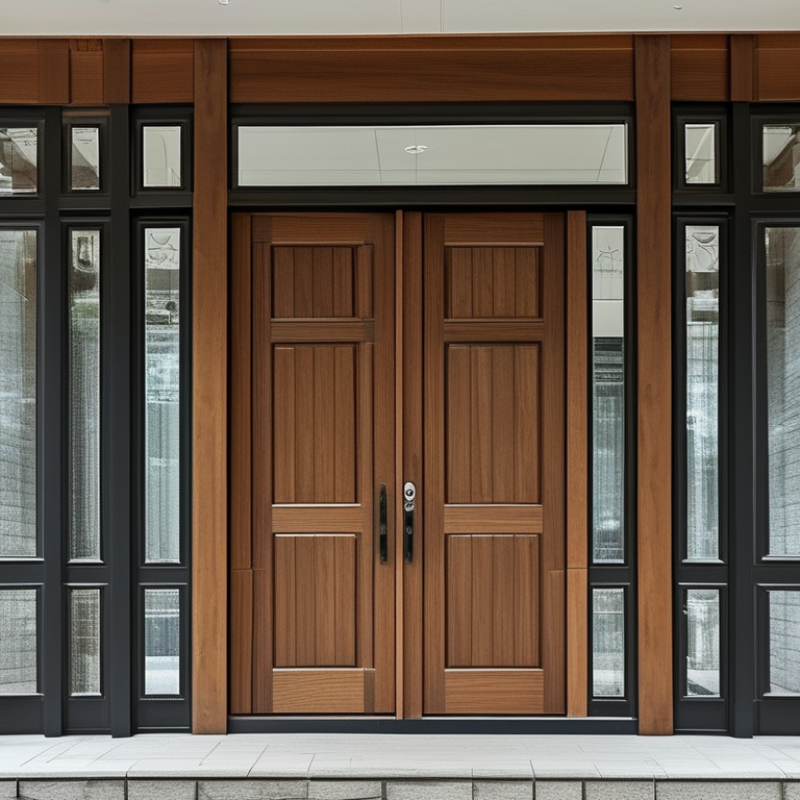
What Makes a Front Entry Door Suitable for Homes in China?
What Makes a Front Entry Door Suitable for Homes in China?
A suitable front entry door should match the local climate, building type, and daily habits. In humid southern cities, sealed edges and corrosion-resistant hardware help prevent swelling and rust. Northern homes may need stronger insulation against dry winters and temperature changes. Coastal properties require extra protection from salt air and strong winds. A well-fitted door also reduces hallway noise, which matters in busy apartment buildings.
Security should feel practical, not excessive. A reinforced core, reliable multi-point locking system, and a wide-angle viewer can improve everyday safety. The frame deserves equal attention. Even a strong door performs poorly when the frame is weak or poorly anchored. For apartments, confirm that the opening direction, threshold height, and fire-safety requirements suit the building before ordering. Local installation standards can vary.
Appearance matters too. Many Chinese homes use stone, tile, or narrow entrance areas, so the door should allow comfortable movement without blocking nearby walls. I once assumed a heavier door was always better. It was not. Poor hinges made it difficult to close and caused uneven gaps. Weight must match the frame and hardware. Check samples in person, test the handle, and inspect the seals carefully. Small installation details often decide whether the door remains quiet, secure, and weather-resistant after years of use.
China Best Front Entry Doors How to Choose? - What Makes a Front Entry Door Suitable for Homes in China?
Practical comparison of common front entry door options for different climates, building types, and security requirements in China
| Door Option | Typical Construction | Thermal Performance (Approx. U-Value) |
Security & Strength | Weather Resistance | Maintenance Level | Most Suitable For |
|---|---|---|---|---|---|---|
| Insulated Steel Door | Galvanized or corrosion-resistant steel skins with a foam-insulated core | Approximately 1.0–2.0 W/m²·K, depending on core thickness and frame design | Very high resistance to forced impact when paired with a reinforced frame and multi-point lock | Good; requires sealed edges and a high-quality anti-corrosion coating, especially in coastal areas | Low to medium; inspect coating, hinges, seals, and drainage periodically | Urban apartments, villas, northern and northeastern regions, and high-security entrances |
| Aluminum Door with Thermal Break | Powder-coated or anodized aluminum profiles separated by a low-conductivity polyamide barrier | Approximately 1.4–2.5 W/m²·K; performance depends strongly on glazing, seals, and panel infill | High structural stability with a reinforced lock area; lighter than steel | Very good resistance to humidity, ultraviolet exposure, and temperature changes | Low; clean surfaces and check hardware and seals regularly | Southern China, humid or coastal locations, modern villas, and contemporary apartment entrances |
| Solid Timber Door | Engineered or solid wood construction with protective paint, stain, or exterior-grade finish | Approximately 1.5–2.5 W/m²·K, varying with wood species, thickness, and weather seals | Good, although the frame, hinges, lock case, and door thickness are critical to overall performance | Medium; vulnerable to prolonged rain, high humidity, direct sunlight, and dimensional movement if poorly sealed | Medium to high; finish inspection and periodic refinishing may be required | Covered villa entrances, traditional-style homes, and locations protected from direct weather |
| Fiberglass-Composite Door | Fiberglass-reinforced outer skins with an insulated foam or engineered core | Approximately 1.0–1.8 W/m²·K for a well-insulated panel and frame system | High resistance to dents, warping, and moisture; hardware quality remains essential | Very good in humid climates; confirm ultraviolet stability and edge sealing | Low; usually requires cleaning, seal inspection, and hardware adjustment | Family houses, humid southern regions, and homeowners seeking low-maintenance insulation |
| Security Door with Decorative Finish | Reinforced metal leaf with a protective surface layer, insulated interior, and security hardware | Approximately 1.5–2.8 W/m²·K; verify the complete door-and-frame assembly rather than the panel only | Very high when the frame is anchored correctly and the lock, hinges, and cylinders are tested as a complete system | Good to very good; select a suitable coating for humidity, salt air, and strong sunlight | Low to medium; keep the locking mechanism clean and inspect seals and surface finish | Apartment main entrances, villas, and homes where burglary resistance is the primary concern |
| Glass-Paneled Entry Door | Insulated door leaf incorporating tempered or laminated safety glass and a reinforced frame | Approximately 1.6–3.0 W/m²·K; low-emissivity double glazing improves insulation | Medium to high when laminated safety glass, secure glazing beads, and quality locks are used | Good, provided the glass perimeter, frame joints, and threshold are properly sealed | Medium; clean glass and inspect seals, drainage, and hardware | Well-lit villas and modern homes where daylight and visibility are important |
Key Selection Criteria for Homes in China
- Choose corrosion-resistant finishes and stainless or protected hardware for coastal and high-humidity areas.
- For northern regions, prioritize an insulated door leaf, thermally improved frame, compression seals, and a well-insulated threshold.
- For southern regions, give extra attention to moisture resistance, drainage, ultraviolet stability, and resistance to mold around seals.
- Compare the complete installed door assembly, including the frame and threshold, rather than the door panel alone.
- For apartments, confirm opening direction, corridor clearance, fire-safety requirements, and building-management rules before ordering.
- Use laminated or tempered safety glass where glazing is included, and select locks and hinges that match the required security level.
Note: U-values are indicative ranges for comparable door systems. Actual performance depends on panel thickness, frame design, glazing area, installation quality, weather seals, and local testing methods.
Related Posts
-
2026 Top Trends for Front Entry Doors What to Expect?
-
Top 10 Front Doors in China for Global Buyers to Consider?
-
Top 10 Entry Doors and Windows Buyers Guide for Global Shoppers?
-
What is the Best Type of Entry Doors for Your Home? A Comprehensive Guide
-
Why Choose the Best Entry Doors for Your Home?
-
What are the Best Entry Doors for Home Security and Style?