
10 Best Doors and Windows Suppliers for Global Buyers
Choosing reliable doors windows suppliers is not a simple price comparison. Global buyers must examine performance, documentation, production experience, and after-sales support. A supplier may offer attractive aluminum frames, but weak packaging can damage them before installation. That detail matters.
This guide, “10 Best Doors and Windows Suppliers for Global Buyers,” evaluates manufacturers through practical purchasing criteria. These include thermal insulation, air and water resistance, hardware quality, customization, factory capacity, certifications, delivery reliability, and warranty clarity. Regional climate also changes the decision. Coastal projects need stronger corrosion protection. Cold regions require better glazing systems. Tropical buildings may prioritize ventilation, shading, and storm resistance.
Vitruvius, the Roman architect and author of De Architectura, wrote, “Well building hath three conditions: commodity, firmness, and delight.” His principle still applies. Doors windows should operate smoothly, protect occupants, and support the building’s appearance. Yet appearance alone can mislead. A polished showroom sample does not prove consistent factory production.
The suppliers reviewed here represent different strengths, including residential systems, commercial façades, energy-efficient glazing, security doors, and large-scale project support. Their positions may change as technology, costs, and regional standards develop. Buyers should verify current test reports, material specifications, factory audits, and references before signing a contract.
Some evaluations remain imperfect. Supplier transparency is not always equal, and online information can be incomplete. That is why careful questions are essential. Ask for sample corners, hardware details, packaging photos, installation guidance, and realistic lead times. The best supplier is not always the largest. It is the one that can reliably deliver suitable products for the project’s actual conditions.
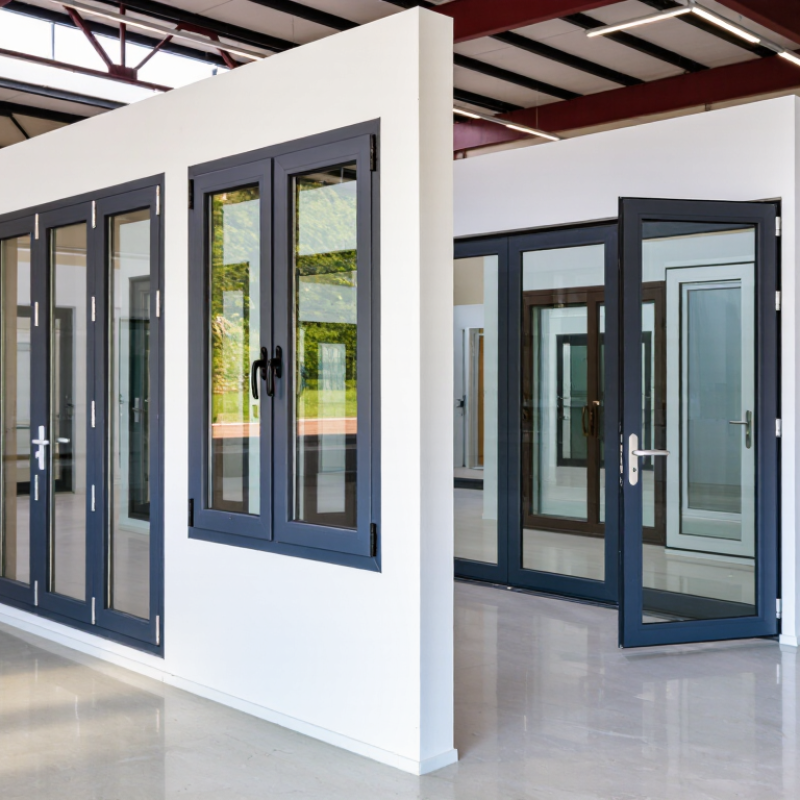
What Defines a Reliable Doors and Windows Supplier
A reliable doors and windows supplier proves more than production capacity. They show consistent quality through documented processes, trained workers, and traceable materials. During supplier checks, buyers should request factory photos, inspection records, and recent project references. A polished catalog is not enough.
Technical expertise matters at every stage. The supplier should explain frame tolerances, glass performance, sealing methods, hardware options, and installation conditions. They must understand regional requirements for wind pressure, insulation, fire safety, and moisture control. Clear drawings and physical samples reduce costly misunderstandings. Ask difficult questions early.
Communication reveals operational reliability. A dependable supplier confirms dimensions, finishes, packaging details, production dates, and shipping responsibilities in writing. They report delays instead of hiding them. Trial orders can expose weak quality control before a large contract begins. That lesson is easy to ignore.
Independent testing adds authority, but certificates deserve careful review. Check issuing laboratories, test dates, product models, and applicable standards. A supplier should also provide a practical warranty process, replacement guidance, and responsive after-sales support. Visit the facility when possible, or arrange a live video inspection. Small details matter, such as corner protection, label accuracy, and moisture-resistant packing. Even experienced buyers make assumptions. A second inspection can prevent an expensive mistake.
10 Best Doors and Windows Suppliers for Global Buyers - What Defines a Reliable Doors and Windows Supplier
| No. | Supplier Profile | Main Product Focus | Typical Buyer Markets | Relevant Standards or Certifications | Typical MOQ | Typical Production Lead Time | Reliability Indicators |
|---|---|---|---|---|---|---|---|
| 1 | Large-scale aluminium systems manufacturer | Aluminium windows, curtain walls, sliding doors and entrance systems | Commercial construction, high-rise and residential development | ISO 9001; applicable EN, ASTM, AAMA or local building standards | 50–100 units | 30–60 days | Documented system design, structural calculations, water and air performance testing, stable extrusion capacity and export packaging controls |
| 2 | uPVC window and door specialist | Tilt-and-turn windows, casement windows, patio doors and residential systems | Europe, North America, Australia and cold-climate housing | ISO 9001; CE-related requirements where applicable; NFRC or local thermal standards | 50–200 units | 25–50 days | Multi-chamber profiles, welded-corner quality checks, verified U-value data, hardware adjustment records and replacement-part availability |
| 3 | Energy-efficient glazing supplier | Double glazing, triple glazing, low-E glass and insulated glass units | Green buildings, passive-house projects and energy retrofit programs | EN 1279; EN 1096; ASTM C1036 and applicable regional energy codes | 100–300 units | 20–45 days | Certified thermal and solar-performance data, seal integrity testing, spacer-bar quality control and documented glass traceability |
| 4 | Fire-rated door manufacturer | Steel, timber and glazed fire doors for commercial and industrial buildings | Hospitals, hotels, schools, factories and public infrastructure | EN 1634-1; UL 10C; NFPA 252 or equivalent local fire-test standards | 20–100 units | 35–70 days | Valid fire-test reports, approved hardware combinations, controlled door-core composition, factory inspection records and installation instructions |
| 5 | Security entrance door supplier | Steel security doors, multipoint locking doors and reinforced entrances | Residential security, offices, retail and public buildings | EN 1627; EN 12209; ASTM F476 or applicable security classifications | 20–100 units | 30–60 days | Resistance-class test evidence, lock-cycle testing, accurate frame tolerances, corrosion protection and secure key or cylinder management |
| 6 | Thermal-break aluminium supplier | Thermally broken windows, doors and large-format sliding systems | Hot and cold climates, premium homes and energy-code projects | ISO 9001; EN 14351-1; ASTM E283, E331 and E330 where applicable | 30–100 units | 35–65 days | Verified thermal-break design, tested air and water performance, controlled powder coating or anodizing and accurate shop drawings |
| 7 | Wooden window and door manufacturer | Solid timber, engineered wood and wood-aluminium windows and doors | Heritage renovation, luxury residential and sustainable construction | FSC chain-of-custody where claimed; EN 14351-1; applicable moisture and coating standards | 20–80 units | 40–80 days | Moisture-controlled timber storage, finger-joint or lamination controls, coating warranty, corner-joint inspection and sustainable material documentation |
| 8 | Large-panel and panoramic door specialist | Bi-fold doors, lift-and-slide doors and oversized glazed openings | Luxury housing, resorts, villas and architectural projects | EN 14351-1; EN 12207; EN 12208; applicable structural-load standards | 10–50 units | 45–90 days | Verified maximum sash dimensions, smooth hardware operation, deflection calculations, reinforced packaging and experienced site-support teams |
| 9 | Commercial storefront and curtain-wall supplier | Storefront framing, curtain walls, commercial entrances and shopfront doors | Retail, offices, airports, shopping centers and mixed-use buildings | EN 13830; ASTM E330; ASTM E331; local structural and fire regulations | 50–200 units | 40–75 days | Engineering support, pressure-equalized drainage design, tested façade performance, accurate take-offs and coordinated delivery schedules |
| 10 | Custom project and private-label supplier | Made-to-order windows and doors with custom colors, sizes, hardware and packaging | Importers, distributors, contractors and property developers | ISO 9001; destination-market product standards; material and coating compliance documents | 10–50 units | 35–75 days | Clear technical drawings, approved pre-production samples, transparent change-control procedures, export experience and defined warranty terms |
Note: MOQ and lead-time figures are indicative industry benchmarks for international orders. Actual requirements vary according to product specifications, order volume, customization, testing and destination-market regulations.
Related Posts
-

2026 Top Patio Windows Trends for Global Buyers What to Know?
-
Top 10 Benefits of Installing Patio Windows for Your Home
-

2026 Best Windows Warranty Options for Your Device Needs?
-
Best Patio Doors with Windows for Your Home in 2026?
-
How to Choose the Best Front Entry Doors for Your Home?
-
Best Windows for Your Home Choosing the Right Windows?